
What is LiDAR?
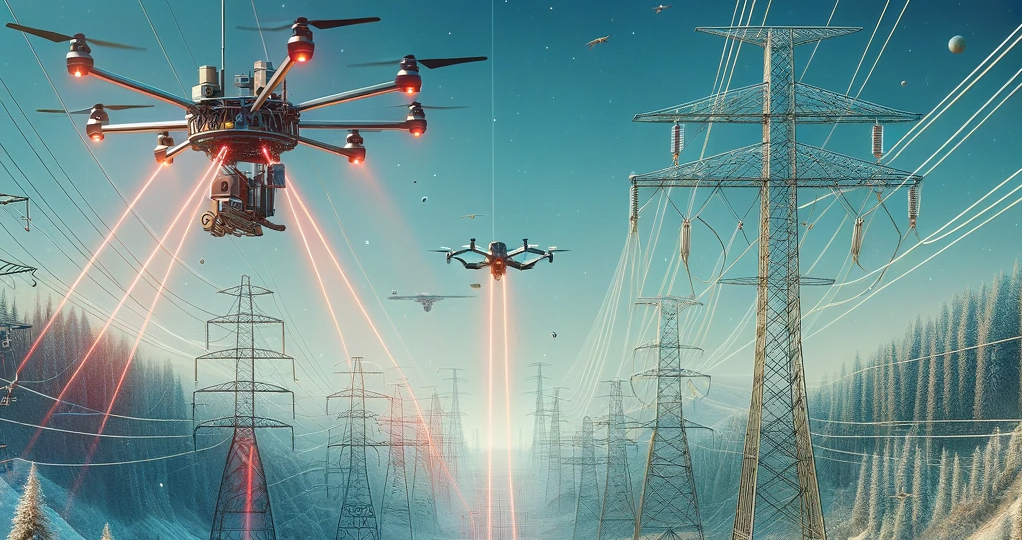
LiDAR (Light Detection and Ranging) measures distance much like RADAR and SONAR by calculating how long it takes for thousands of laser pulses to reach an object and reflect. These reflections plus data gathered from other sensors in the LiDAR unit are then converted into highly accurate (x,y,z) point cloud datasets. The LiDAR unit also includes sensors such as GPS for tracking the location and IMU (inertial measurement unit) to account for the tilt inherent in the drone.
What is PhoDAR?
PhoDAR also referred to as Photogrammetry involves taking thousands of high-resolution photos over a certain area with different vantage points and overlapping these photos with one point of reference on the ground. Then the series of photographs are used to extract three-dimensional data and create a fully 3D model of the real world. The datasets from photogrammetry include 2D, and 3D, the texture shape and the colour of the point. Photogrammetry stitches photos together to create its model so all the visual features and details of the survey site are available in the 3D model.
Differences and Applications of LiDAR and Photogammetry
Both LiDAR and PhoDAR serve similar purposes but they have major differences. When determining which technology is best for site surveying the size of the area and the required level of accuracy need to be considered. This in short is because Photogrammetry can cover large areas very quickly with low accuracy data, while LiDAR covers a small area with high accuracy data.
Visually, 3D models acquired from Photogrammetry look much closer to real life when compared to LiDAR. However, LiDAR can produce higher detail data when vegetation is dense in the site being surveyed. This is because the pulses from LiDAR can penetrate vegetation better I.e. go around leaves, and branches and map the terrain underneath better than Photogrammetry. The higher accuracy in LiDAR when vegetation is dense can be beneficial for projects where vegetation management is important.
If the project at hand allows for flexibility in which technology is used, many would opt for Photogrammetry due to the significant difference in cost. PhoDAR is approximately 1/5th the cost of LiDAR. This significant price difference reflects both PhoDAR’s strengths and weaknesses. PhoDAR hardware is cheaper and data takes significantly longer to process. This makes PhoDAR an attractive option for site maintenance applications.
LiDAR uniquely provides features that are not inherent in PhoDAR and are imperative in many industries. LiDAR can model power lines and cables with a significantly higher accuracy when compared to PhoDAR. Similarly, PhoDAR is best used for projects such as mapping large areas with different terrains, quarries and mines.
Deciphering the Best Choice: LiDAR or PhoDAR?
When it comes to picking the right technology for a project there is no one size fits all solution. The two technologies’ similarities are like a Venn diagram both have applications that overlap. However, each technology has features not available in the other. Therefore, understanding which type of data is most suitable for the project is crucial.
At HIKA Design, we have the full capability of assisting our clients in LiDAR data collection. We also excel in working with our network of suppliers to develop technical specifications and conduct purchasing tenders for LiDAR data and ortho-rectified imagery, point clouds, and planimetrics.